TOP-RATED GLOBAL SOURCING & E-COMMERCE SOLUTIONS FOR AMBITIOUS BRANDS

Factory to Marketplace: Overcoming the Logistics Bottlenecks of Multi-Channel Retail
Managing a fragmented supply chain across modern e-commerce networks can quickly turn into an operational nightmare. Discover how integrating factory quality assurance, smart freight routing, and agile production syncing can help your brand conquer multi-platform retail without risking costly stockouts.
3 min read
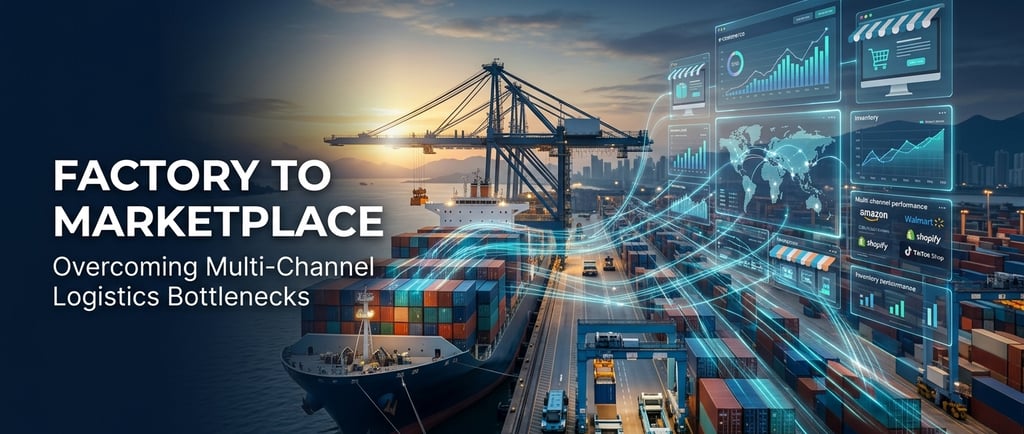
Factory to Marketplace: Overcoming the Logistics Bottlenecks of Multi-Channel Retail
Scaling an e-commerce brand used to mean mastering a single sandbox. You picked a platform—usually Amazon or a standalone Shopify store—drove your traffic, and fulfilled your orders.
But today, true enterprise-level scale demands a aggressive strategy: multi-channel execution. To capture modern consumer attention, established brands must establish a presence across a fragmented web of marketplaces, including Amazon, Walmart, Shopify, and TikTok Shop.
While diversifying your storefronts opens massive revenue streams, it introduces a brutal backend reality: a logistics nightmare. Managing fragmented supply chains, navigating conflicting platform requirements, and dealing with unpredictable lead times can quickly stall your growth. For brands looking to optimize cross-border shipping and inventory management, the path forward requires transitioning from disjointed shipping processes to comprehensive supply chain optimization.
1. The Fragmentation Trap: Why Multi-Platform Retail Chokes Growth
The dream of multi-channel retail is simple: list your products everywhere and watch the sales roll in. The operational reality, however, is a chaotic balancing act.
Every marketplace operates by its own strict, unforgiving set of rules:
Amazon Logistics demands hyper-specific labeling, pallet configurations, and strict adherence to delivery windows to avoid costly inventory placement fees and chargebacks.
Walmart Fulfillment Services (WFS) has its own distinct inbound criteria that cannot simply be copy-pasted from your Amazon playbook.
TikTok Shop Inventory requires extreme agility, as viral trends can cause sudden demand spikes that require immediate fulfillment to avoid algorithmic penalties.
When your logistics network is fragmented—split across isolated software tools, disconnected custom brokers, and different regional warehouses—your capital gets trapped. You end up overstocked on one platform while facing devastating stockouts on another. To scale reliably, you must stop treating each marketplace as an isolated island and start viewing your supply chain as a unified pipeline.
2. Building a Seamless Pipeline: From Factory Floor to Digital Storefront
Overcoming multi-channel bottlenecks requires integrating your operations from the very beginning of the product lifecycle. You cannot fix a broken supply chain at the domestic warehouse level; you have to fix it at the source.
Mitigate Risk with Upstream Factory Audits
The most expensive mistake a multi-channel brand can make is paying premium shipping rates and import duties on defective merchandise. When your inventory is split across multiple fulfillment networks, a batch of faulty products can trigger a cascade of negative reviews and account suspensions across all platforms simultaneously.
Implementing rigorous, independent factory audits and strict quality assurance (QA) on the factory floor ensures that only flawless, market-ready sellable SKUs ever touch a shipping container.
Unify Your Strategy with Consolidated Freight Forwarding
Piecemeal shipping kills profit margins. If you are booking separate, small cargo shipments for different marketplaces, you are overpaying for ocean freight and customs clearance.
By integrating your product sourcing with consolidated freight forwarding and strategic routing, you create a seamless pipeline. This allows you to ship inventory in bulk, clear customs under a unified entry, and dynamically split your containers at a centralized domestic hub based on real-time platform demand.
3. Syncing Production Cycles with Volatile Consumer Demand
The rise of social commerce platforms like TikTok Shop has completely rewritten the rules of consumer demand. Traditional, slow-moving inventory forecasting models are obsolete when a single viral video can deplete months of stock in 48 hours.
The ultimate operational challenge for scaling brands is learning how to sync international factory production cycles with this rapid, volatile demand without experiencing costly stockouts.
Achieving this level of agility requires:
Flexible Manufacturing Agreements: Negotiating agile manufacturing arrangements with trusted suppliers to allow for faster production turnarounds and component pre-stocking.
Real-Time Data Visibility: Bridging the gap between your front-end sales dashboards and your upstream manufacturing partners so production can scale up or down based on live market velocity.
When your international production matches the speed of digital retail, you protect your platform rankings, maximize your ad spend, and guarantee that your brand is always open for business.
The Path Forward: Lock Down Your Pipeline
Real-world growth isn't just about expanding your digital storefronts; it's about mastering the operational pipeline that powers them. By eliminating fragmentation, prioritizing strict upstream QA, and unifying your logistics, your brand can transform a complex multi-channel network into a frictionless engine for global scale.
Want to de-risk your operations and unify your logistics? At ParaUnion, we help ambitious e-commerce brands navigate the complexities of multi-channel execution—from factory sourcing and audits to global freight routing and seamless fulfillment.
Contact our team today to optimize your factory-to-marketplace pipeline.
Company
© 2026 ParaUnion Ltd. All rights reserved.
Headquarters
Mississauga, Canada - operating globally.


Our Commitments